The Game
Wavefront: Vanguard is a low-poly, combined-arms real-time strategy game about seeing first, striking first, and holding the line on land, at sea and in the air.
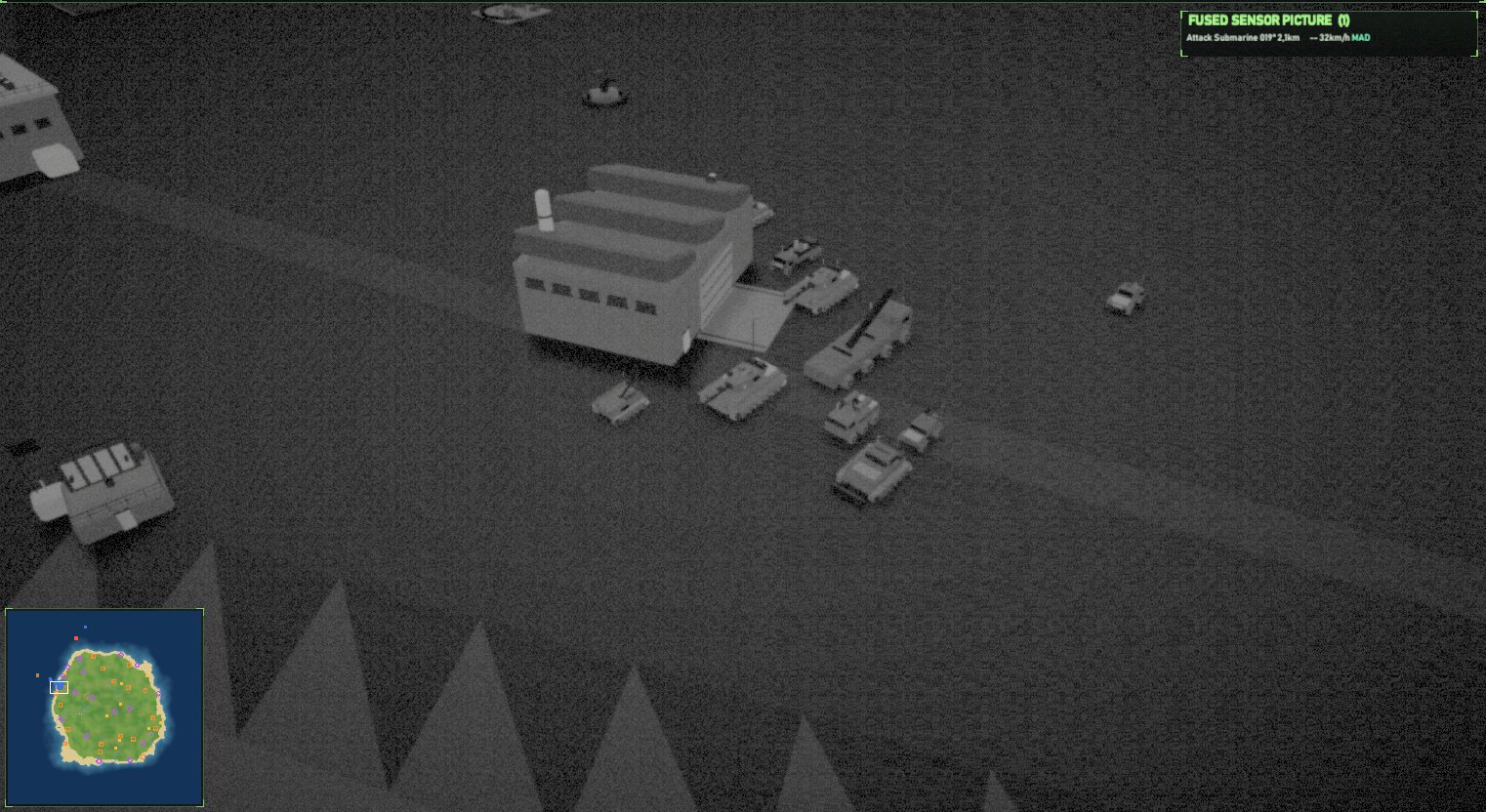
Most RTS games treat vision as a circle around each unit. Here, information is the main weapon. An enemy only exists for you while one of your detectors actually holds it: eyes, radar, sonar, magnetic sensors or a laser designator. Every detector has its own physics, range limits, blind spots and counters. Winning means building a sensor picture the enemy can't match, then hitting what it shows you.
The information war
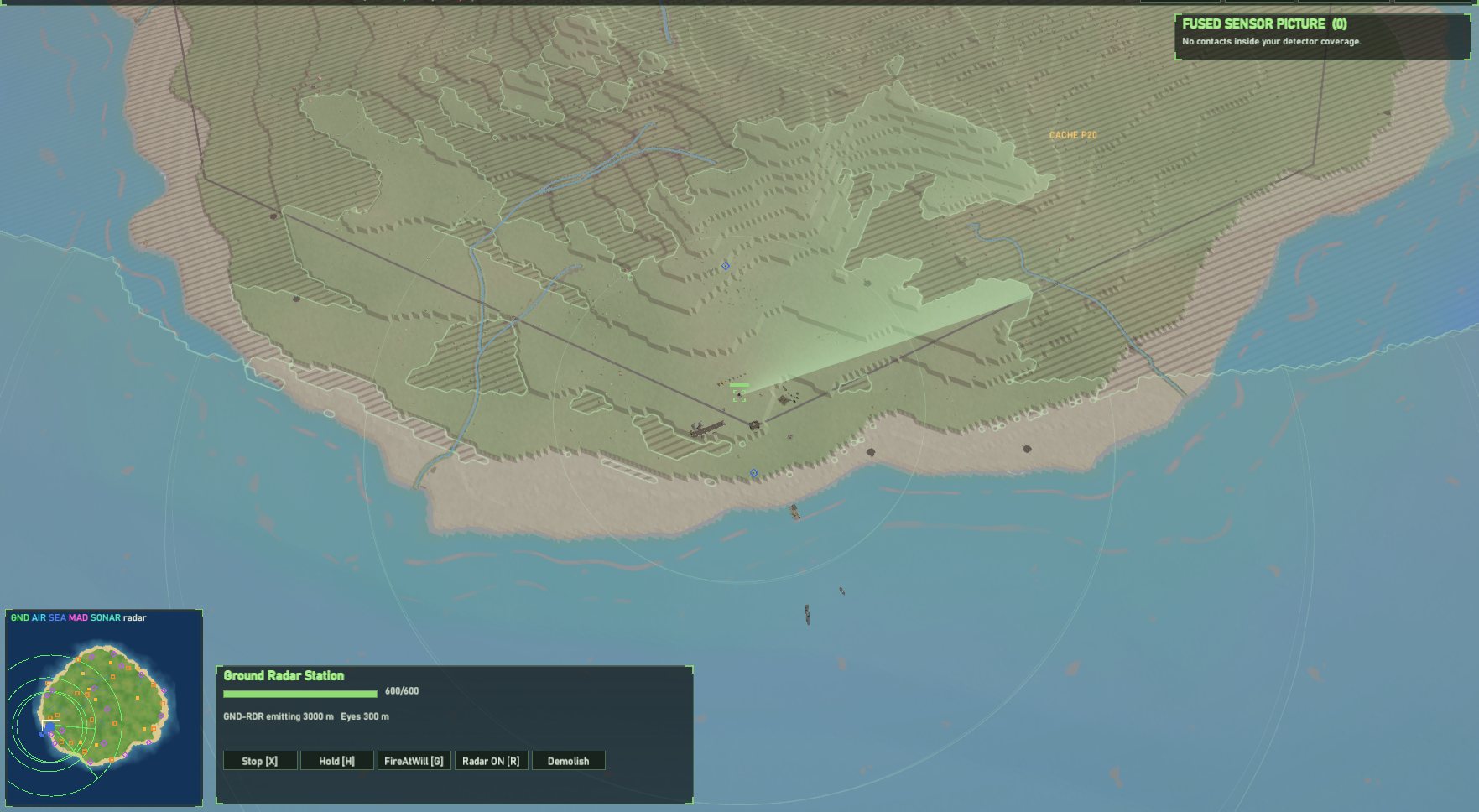
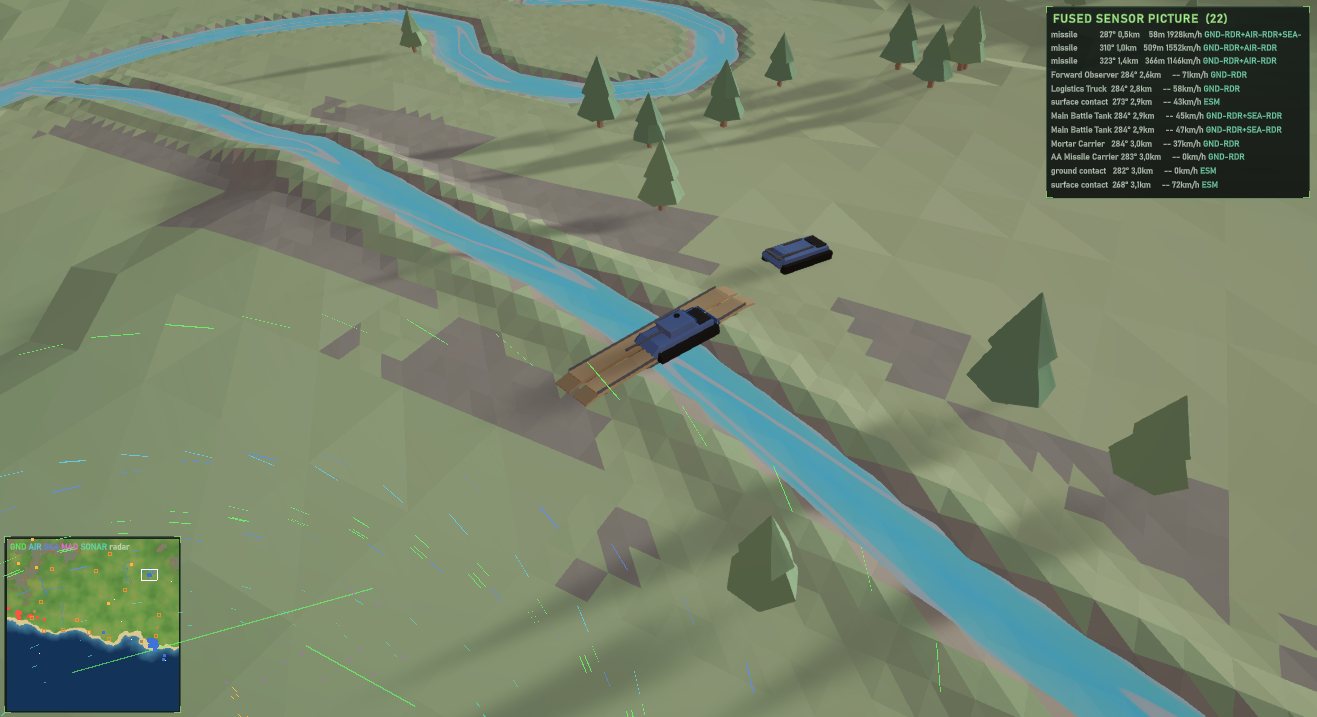
Every detector on your side, and on your allies' side, feeds one fused sensor picture. What you can shoot is what that picture holds, and every detector has a hard range beyond which nothing is seen.
| Detector | Carried by | Range | What to know |
|---|---|---|---|
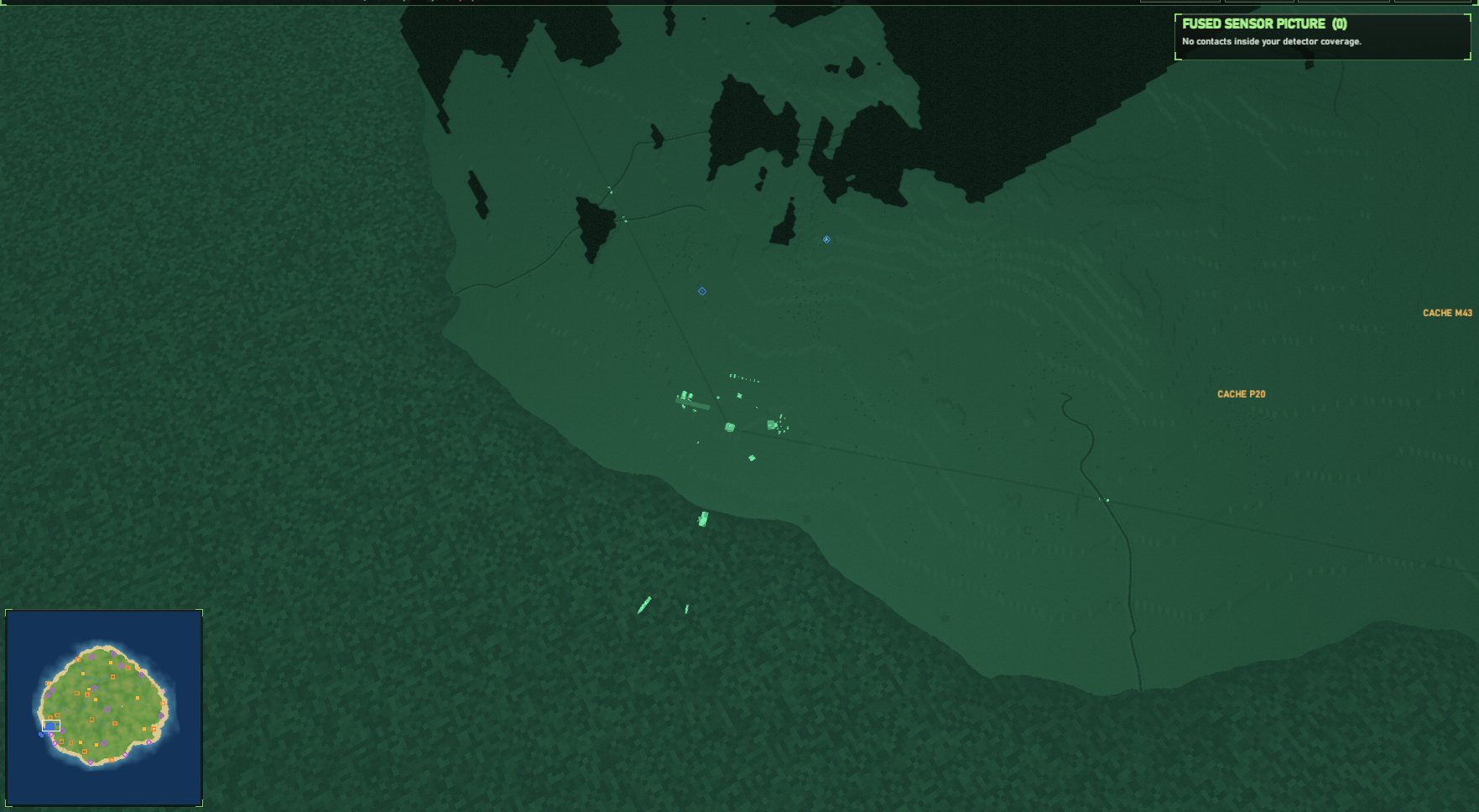
| Eyes / optics | Every unit | 300–600 m | Needs line of sight. Shrinks at night unless the unit has thermal optics. |
| Ground radar | Radar station, airfield, CIWS | 1.5–3 km | Follows the real terrain, so hills cast radar shadows. Low fliers hide in ground clutter. |
| Ship radar | Patrol boat, frigate, carrier | 1.6–3 km | The same, from the sea. |
| Aircraft radar | Fighter, patrol aircraft | up to 3.2 km | A fighter only sees the 60° cone ahead of its nose. |
| Sonar | Ships, submarines, shipyard | 0.6–2.4 km | Underwater only. Loud ships are heard furthest, deep submarines only close in. |
| Magnetic (MAD) | Sensor buoys, patrol aircraft | ~0.7 km | Finds hulls and mines through water at any depth. |
| ESM | Many units | up to 3.5 km | Hears enemy radars and jammers transmitting. |
| IR designator | Forward observer, UAV | short | Locks a target and makes it a magnet for heat seekers. |
- Emission control. Switch a radar off and it vanishes from enemy ESM, but it's blind while it's off.
- Jamming. A jamming station projects an aimable 30° cone out to 2.6 km. Anything inside it drops off every other team's radar. Hills shelter what's behind them, and the jammer's own noise makes it a target.
- Target size matters. Small drones and missiles are picked up much closer in than a frigate.
Combined arms
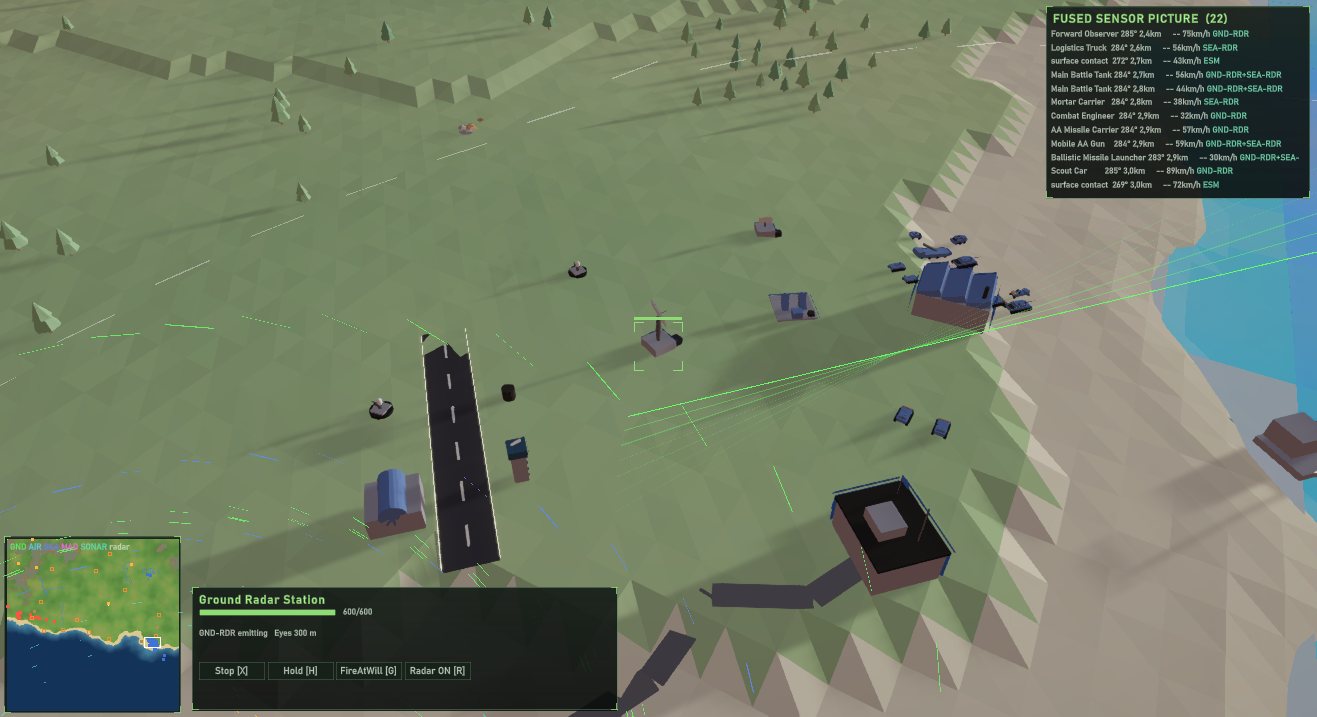
SAM batteries have no radar of their own and need the radar network. Bombers need someone else to find their targets. Carriers need escorts. Every unit has a job and a weakness.
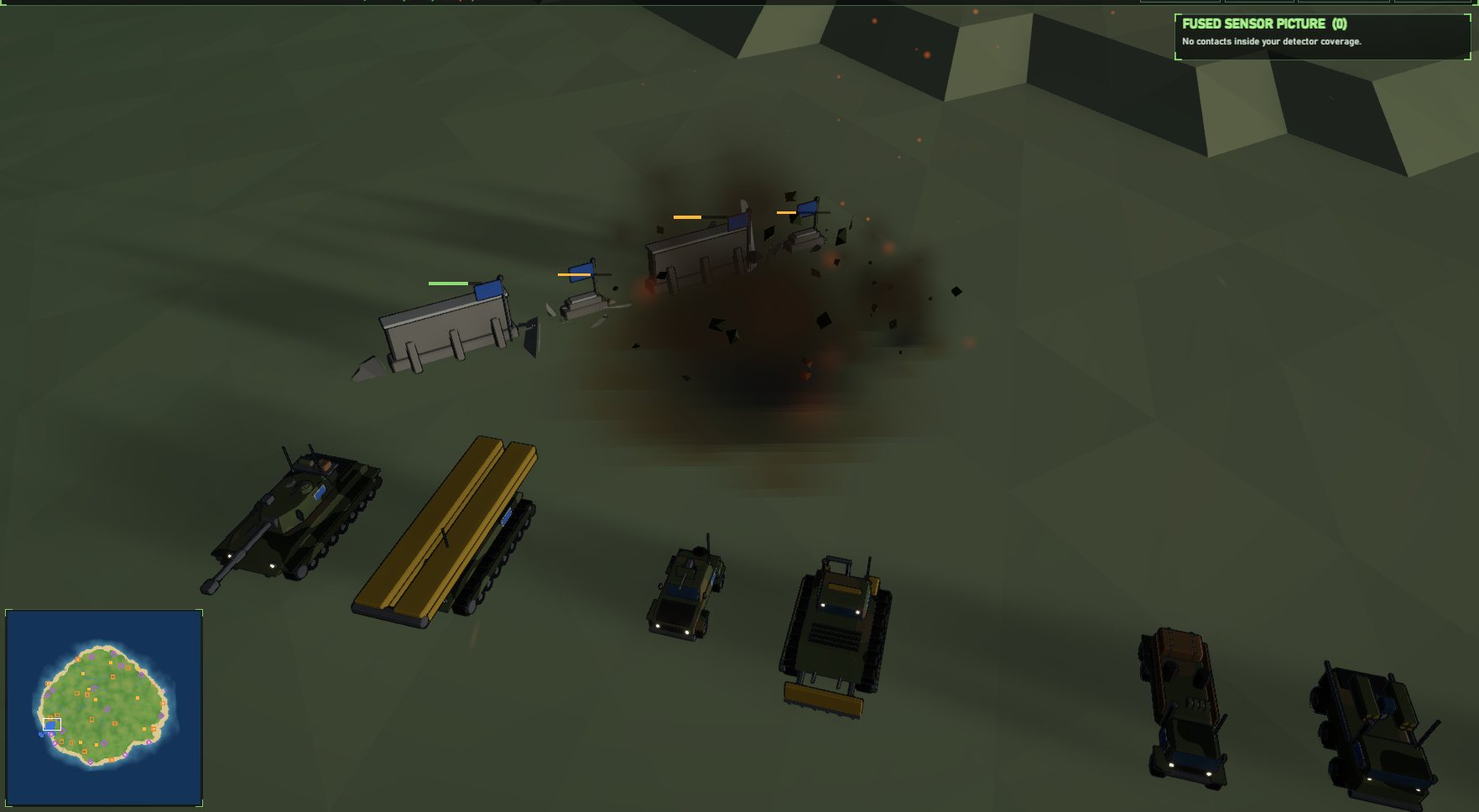
On land: main battle tanks, scout cars that lay mines and IEDs, combat engineers, logistics trucks, forward observers, mortar carriers, mobile AA guns and missile carriers, armored bridge layers, and ballistic missile launchers that can strike any point on the map without seeing it.
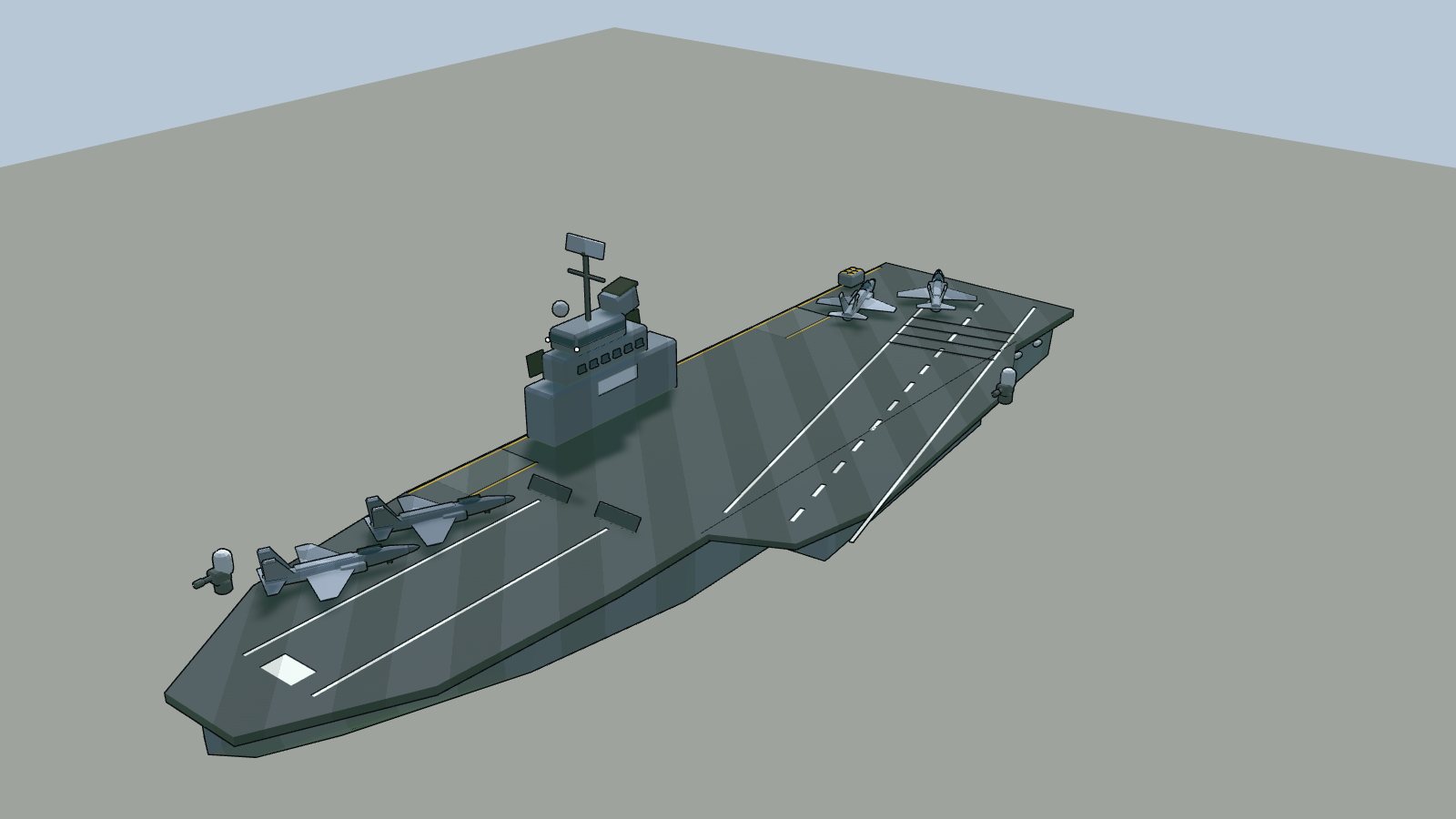
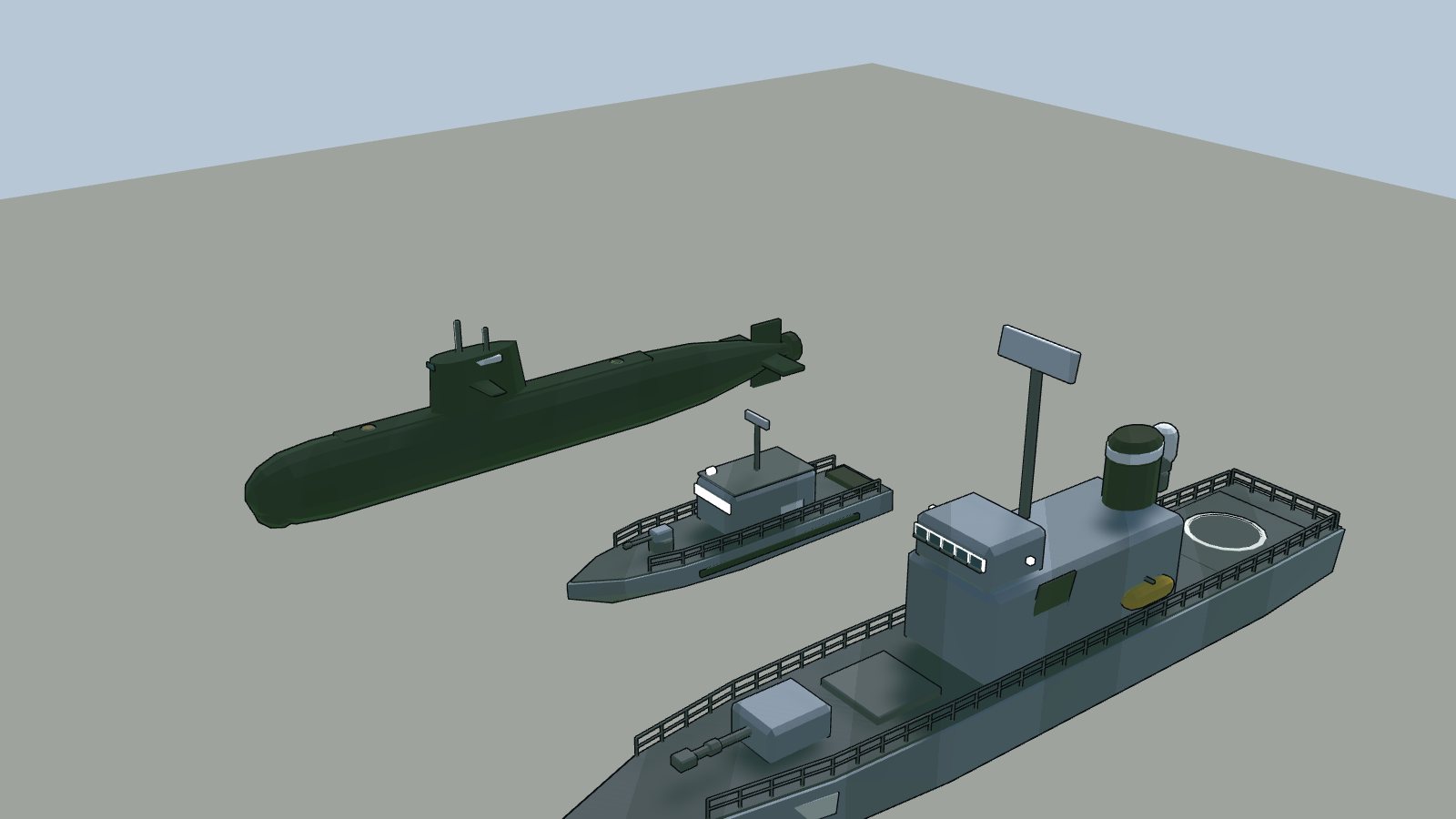
At sea: fast patrol boats, guided-missile frigates, attack submarines that dive deep enough to vanish from everything but sonar, and aircraft carriers that build and rearm aircraft anywhere on the water.
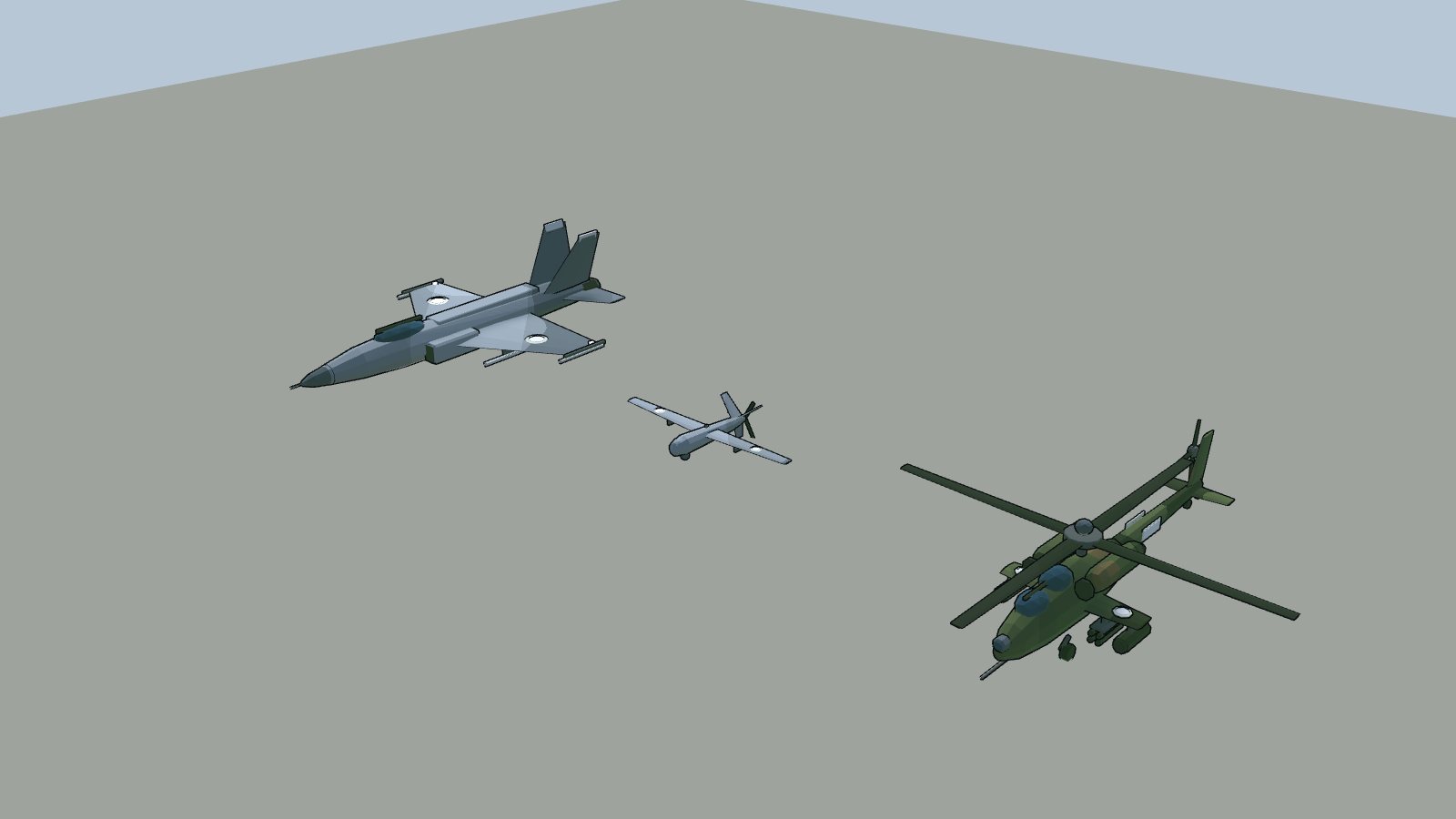
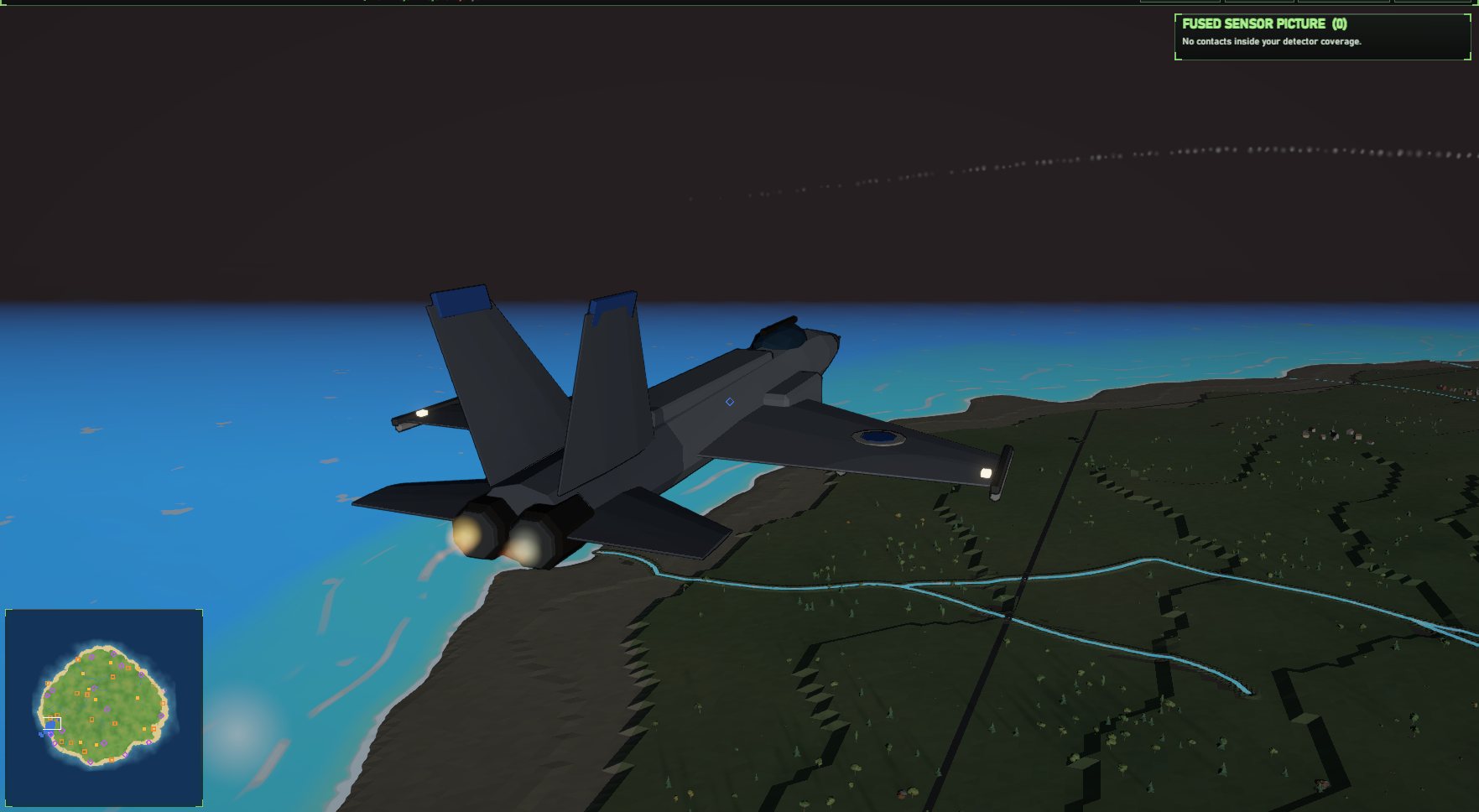
In the air: air-superiority jets, strike aircraft, maritime patrol aircraft that hunt submarines, attack helicopters that hug the terrain, and cheap reconnaissance drones.
Combat
- Simulated weapons. Shells follow ballistic arcs. Missiles fly through boost, loft and terminal phases with g-limited homing.
- Seekers and counters. Heat seekers are decoyed by flares, radar seekers by chaff, and deep submarines are hard to hear.
- Shape your own missiles. Each missile carries a fixed total impulse, and you decide how its motor spends it: a hard boost for short range, or a long sustain for reach. A built-in flight simulation shows the result.
- Mines and obstacles. Land and sea mines, IEDs, concrete blockades and barbed wire, placed exactly where you want them.
- Real destruction. Walls fracture piece by piece, wrecks burn and smoke, and dropping a bridge really does cut that river crossing.
The battlefield
Every match is played on a freshly generated map from a shared seed.
- Shapes: a single large Island, a naval- and air-heavy Archipelago, or a Strait with two landmasses either side of a navigable channel. All 8 km across, ringed by open sea.
- Biomes: Temperate grassland, forests, snowy peaks and rivers, or Desert dunes, mesas and oasis valleys.
- Terrain that matters: mountain ranges block radar, rivers cut valleys, roads give ground vehicles a 35% speed boost, and bridges can be destroyed.
- Day and night: a full day/night cycle changes the battle. At night, eyes lose most of their range unless the unit has thermal optics.
Military strategy over base-building
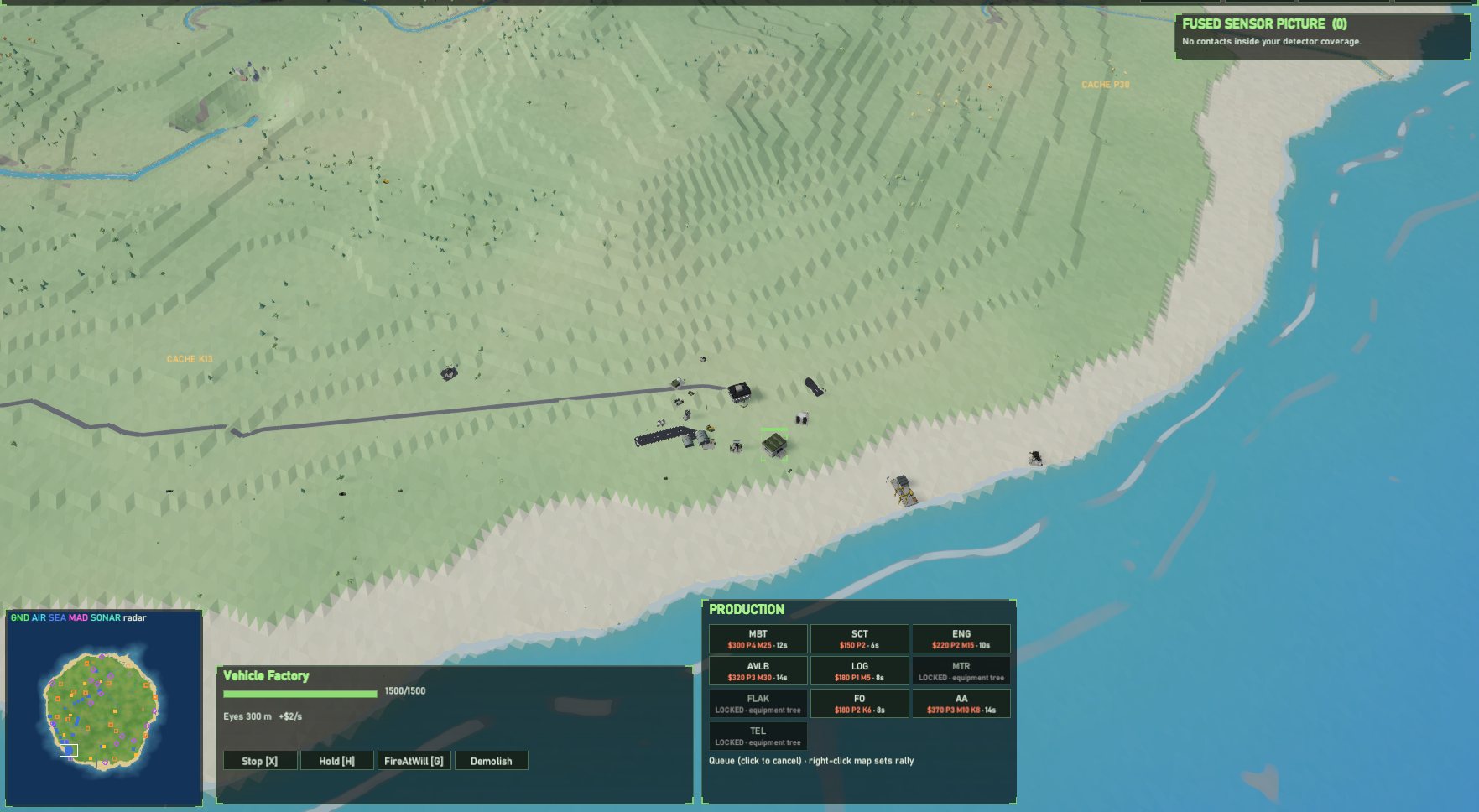
The economy is deliberately small: four economy buildings and five resources (cash, crews, metal, knowledge and fuel). Your decisions go into positioning, timing, logistics and fire support, not into managing a sprawling city.
You start with a Command HQ, two combat engineers and a scout car. Everything else gets built during the match, from vehicle factories and radar stations up to shipyards, airfields and SAM batteries. Lose a building and everything it unlocked goes with it, so key structures are real targets. Every vehicle, ship and aircraft burns fuel, and running dry slows your whole army to a crawl.
Game modes
- Team Deathmatch: eliminate every enemy HQ and production building.
- Capture the Flag: carry the enemy's flag from their base back to your HQ. First to 3 captures wins.
- Domination: hold control points by being the only alliance nearby. First to the target score wins.
- Persistent World: one large, mixed-biome world that saves and reloads. There's no winner: expand, explore and come back to your base later. Roaming world events keep the map alive: hostile compounds, crashed aircraft, supply convoys, pirate flotillas, air raids and more.
Multiplayer and AI
- 1–8 players per match, human or AI, in any alliance arrangement.
- Player-hosted over Steam (friend or public lobbies, invites, no port forwarding) or LAN, plus offline skirmish against AI.
- AI commanders play by the same rules as humans. They only know what their own sensors detect.
Progression
Every match earns XP for a persistent account:
- Skill Tree: operator abilities such as night vision, thermal imaging, the radar scope, faster building and field repair.
- Equipment Tree: requisitioned hardware such as mortar carriers, AA guns, UAVs and ballistic launchers, plus fuzes, seeker heads and warheads.
- Loadout: choose which unlocked modules your weapons carry.
Status
Wavefront: Vanguard is a playable prototype. All four modes, the full unit roster, sensor fusion, vision modes, progression, AI and multiplayer are in place. Balance, audio and a full-scale Steam test are next. Follow along in the devlog.